


Applying noninterference principles in your meditation techniques can transform your practice. Start by embracing thoughts without judgment, allowing them to flow like clouds. Focus on mindful breathing to anchor yourself in the present moment. Use observation to cultivate awareness, letting distractions come and go. Techniques like the body scan can enhance this nonjudgmental posture. As you explore these methods, you’ll find deeper clarity and peace in your mind and heart. More insights await you on this journey.
Key Takeaways
- Focus on mindful breathing to anchor awareness in the present moment and foster a nonjudgmental approach to meditation.
- Utilize body scan techniques to observe bodily sensations without attachment or labeling.
- Allow thoughts to pass like fleeting clouds, cultivating a sense of detachment and acceptance.
- Embrace the transient nature of experiences, observing emotions and distractions without judgment.
- Practice compassionate acceptance of each thought as it arises to enhance clarity and peace during meditation.
Understanding Noninterference Principles in Meditation
In meditation, the principle of noninterference invites you to embrace a state of openness and acceptance. This means allowing thoughts and sensations to arise without judgment or resistance.
As you practice, focus on mindful breathing. Inhale deeply, feeling the air fill your lungs, then exhale slowly, releasing tension. This rhythm of breath creates a foundation for silent reflection.
In this space, you can observe your thoughts as fleeting clouds, noticing them without getting entangled. By not interfering with your natural mental flow, you cultivate a deeper awareness of the present moment.
This approach fosters tranquility and clarity, helping you connect more profoundly with your inner self. Embrace noninterference, and let your meditation journey unfold gently.
The Role of Observation in Meditation Practices

In your meditation practice, observation serves as a powerful tool for cultivating mindfulness.
By embracing nonjudgmental awareness, you allow your thoughts and feelings to flow without attachment or criticism.
This gentle approach fosters a deeper connection with your inner self, enhancing your overall experience.
Mindful Observation Techniques
While you may think meditation is solely about quieting the mind, mindful observation techniques play a crucial role in enhancing your practice. By focusing on mindful breathing, you anchor yourself in the present moment. As you breathe in and out, pay attention to each inhale and exhale, letting it guide your awareness.
Incorporate sensory awareness by tuning into what you can see, hear, and feel around you. Notice the textures of your surroundings, the sounds in the distance, and the rhythm of your breath.
This practice deepens your connection to the present, allowing thoughts to flow without interference. As you cultivate this awareness, you create a nurturing space for clarity and calm, enriching your meditation experience.
Nonjudgmental Awareness Practice
Mindful observation techniques naturally lead you to the practice of nonjudgmental awareness, where the role of observation becomes even more significant.
In this space, you embrace your thoughts and feelings without labeling them as good or bad. Focus on your mindful breathing; let each inhale and exhale ground you in the present moment.
As you observe your sensations, practice compassionate acceptance. Acknowledge each thought as it arises, allowing it to pass without attachment. This gentle approach fosters a sense of peace, encouraging you to recognize the transient nature of your experiences.
Different Meditation Techniques Emphasizing Noninterference

As you explore different meditation techniques that emphasize noninterference, you’ll discover practices designed to cultivate awareness without judgment or attachment.
One effective method is mindful breathing, where you focus solely on your breath. Notice the rhythm as you inhale and exhale, allowing thoughts to pass without engaging with them.
Another powerful technique is the body scan, which invites you to systematically bring attention to various body parts. Start from your toes and move upwards, observing sensations without trying to change them.
This practice deepens your connection to the present moment, fostering an attitude of acceptance. By embracing these techniques, you can cultivate a space of tranquility, enhancing your ability to navigate life’s challenges with ease.
Creating a Safe Space for Self-Exploration
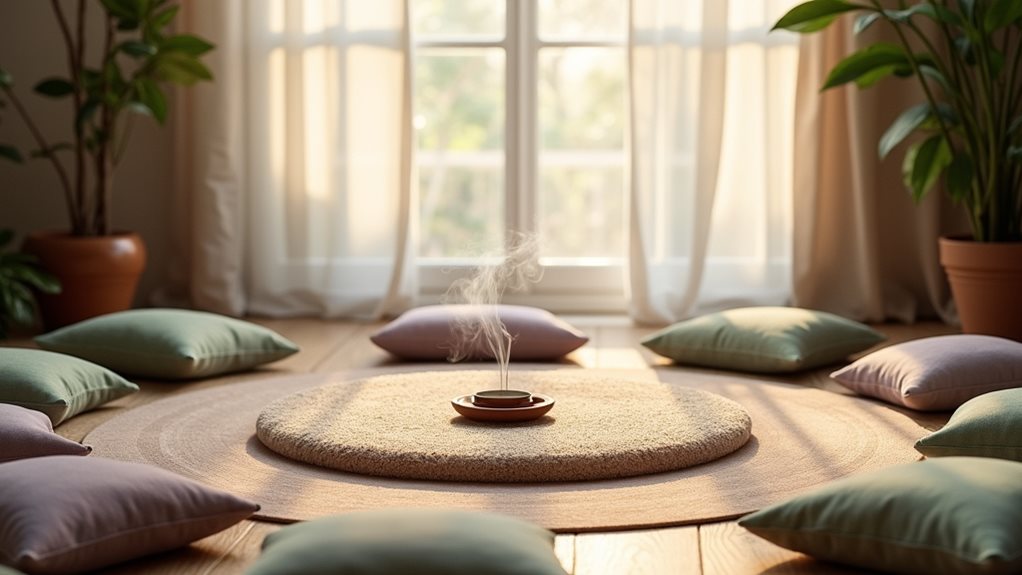
Creating a safe space for self-exploration begins with setting an intention to honor your thoughts and feelings without judgment. This safe environment allows you to investigate deeper into your inner world.
Start by finding a quiet place where you won’t be disturbed, and create a comfortable atmosphere—perhaps using soft lighting or calming scents.
Establish personal boundaries by deciding what topics or emotions you’re ready to explore. Remember, it’s okay to pause or shift focus if things become overwhelming.
Use mindfulness techniques to stay present, gently redirecting your thoughts when they drift. This nurturing approach fosters self-discovery, enabling you to understand yourself better while feeling secure.
Embrace this journey with compassion and patience, allowing growth at your own pace.
Overcoming Challenges in Meditation Through Noninterference
Once you’ve established a safe space for self-exploration, you might encounter challenges during your meditation practice. Mindful distractions and emotional resistance can arise unexpectedly. Embracing noninterference helps you navigate these hurdles with grace.
| Challenge | Noninterference Approach | Benefit |
|---|---|---|
| Mindful Distractions | Acknowledge and release | Greater focus |
| Emotional Resistance | Observe feelings without judgment | Deeper self-awareness |
| Restlessness | Accept and breathe into it | Enhanced calmness |
| Overthinking | Let thoughts come and go | Clearer mind |
| Frustration | Recognize and return to breath | Renewed motivation |
Integrating Noninterference Principles Into Daily Life

While life often presents a whirlwind of responsibilities and distractions, integrating noninterference principles into your daily routine can foster a sense of peace and balance.
Start by practicing mindful communication; listen deeply and respond thoughtfully, allowing others the space to express themselves without judgment. This approach nurtures relationships while respecting emotional boundaries.
Set clear boundaries for yourself, ensuring you protect your mental space from unnecessary stress.
Carve out time for reflection, allowing your thoughts to settle without interference. Incorporate short moments of stillness throughout your day, whether through deep breathing or a brief walk.
These practices not only enhance your meditation but also cultivate a calmer, more centered life. Embrace these principles, and you’ll find serenity amidst the chaos.
Frequently Asked Questions
Can Noninterference Principles Be Applied to Other Wellness Practices?
Absolutely, you can apply noninterference principles to various wellness practices. In yoga practices, you’ll focus on your breath without forcing shifts. With mindful eating, you’ll savor each bite, allowing your body to guide your choices naturally.
How Can I Measure My Progress in Noninterference Meditation?
Isn’t measuring progress like watching a flower bloom? You can use progress indicators such as journaling and self-reflection techniques to track your growth, noticing subtle changes in awareness and emotional responses over time.
Is There a Specific Time of Day for Noninterference Meditation?
There’s no specific time for noninterference meditation; morning sessions can energize your day, while evening routines help you unwind. Choose what feels best for you, and consistency will deepen your practice over time.
Can Children Practice Meditation With Noninterference Principles?
“Let the child lead.” Yes, children can practice meditation with noninterference principles. By encouraging child mindfulness and exploring various meditation techniques, you help them discover their inner peace and develop a lifelong, calming practice.
What Are the Benefits of Noninterference Meditation for Mental Health?
Noninterference meditation fosters stress reduction and enhances emotional regulation. By allowing thoughts to flow naturally without judgment, you create a calming space for self-discovery, empowering your mental health and nurturing resilience against life’s challenges.
Conclusion
By embracing noninterference principles, you’re not just meditating—you’re revealing the secrets of the universe! Imagine floating on a cloud of serenity, where every thought dissolves into pure calm. This practice doesn’t just transform your meditation; it revolutionizes your entire life! With each moment spent in observation, you’re crafting a sanctuary of self-discovery that can withstand any storm. So, step boldly into this journey, and watch as your world shifts into a masterpiece of tranquility!
