

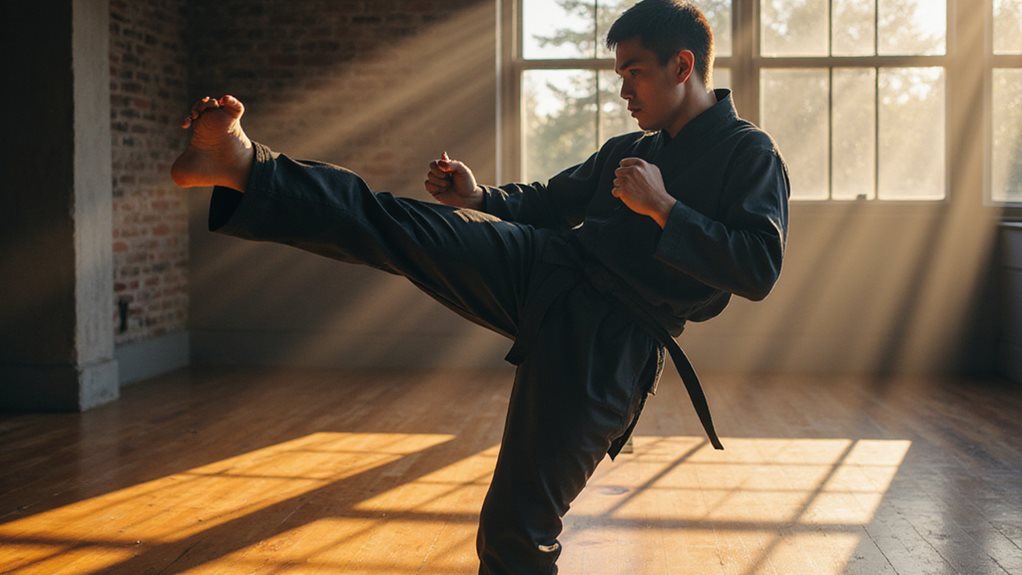
Dim Mak, rooted in ancient Chinese martial arts, focuses on precision strikes to specific pressure points on the body. This practice disrupts energy flow and can manipulate pain and movement effectively. Mastery requires years of disciplined training, emphasizing technique, timing, and context. It’s often misunderstood, as it’s not always lethal and isn’t a quick skill to acquire. Ethical use prioritizes safety and responsibility, guiding you towards not just skill but also inner peace. Discover more about its intricacies.
The Origins of Dim Mak
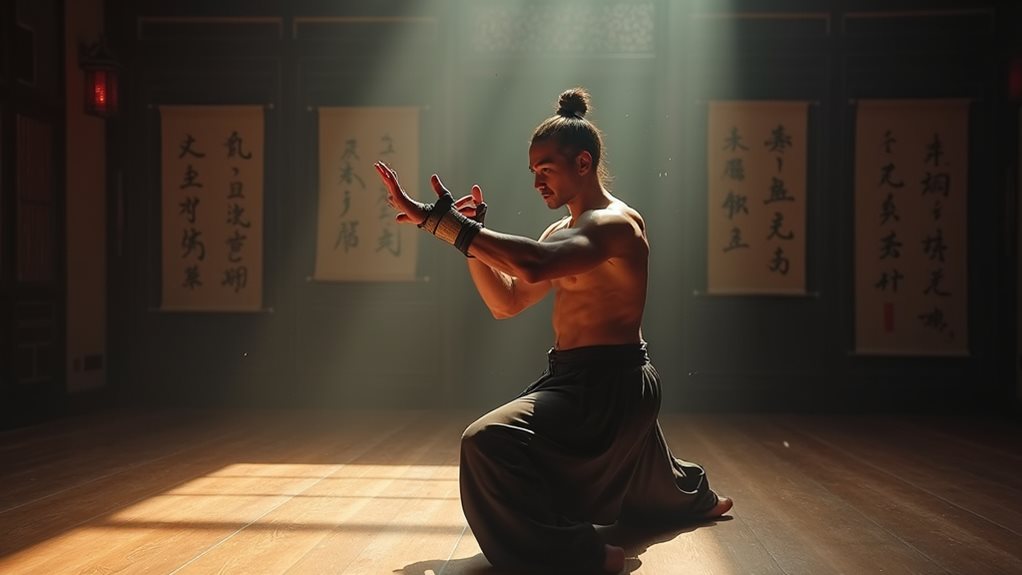
The origins of Dim Mak can be traced back to ancient Chinese martial arts, where practitioners believed in the existence of essential points on the body that, when struck, could disrupt an opponent’s energy flow.
Dim Mak, rooted in ancient Chinese martial arts, reveals vital points on the body that can disrupt energy flow in combat.
This concept draws heavily on historical influences from traditional Chinese medicine, particularly the meridian system, which links physical health to energy flow.
Dim Mak’s cultural significance extends beyond mere combat; it embodies philosophical principles of balance, harmony, and self-discipline.
By understanding these pressure points, you tap into a rich heritage that emphasizes both physical prowess and mental acuity.
This martial art reflects the merging of spiritual and physical practices, highlighting the importance of intention and mindfulness in both combat and daily life.
The Science Behind Pressure Points
Understanding pressure points requires a look at the underlying physiological mechanisms that govern the body’s response to external stimuli.
Pressure point physiology focuses on how specific areas of the body can trigger a neurovascular response, leading to various effects.
Key factors include:
- Nerve Endings: Concentrated in certain areas, they amplify pain perception.
- Blood Vessels: Pressure on these points can disrupt circulation temporarily.
- Muscle Groups: Striking can induce involuntary muscle contractions.
- Reflex Arcs: These pathways can cause rapid, involuntary reactions.
Myths and Realities of Dim Mak
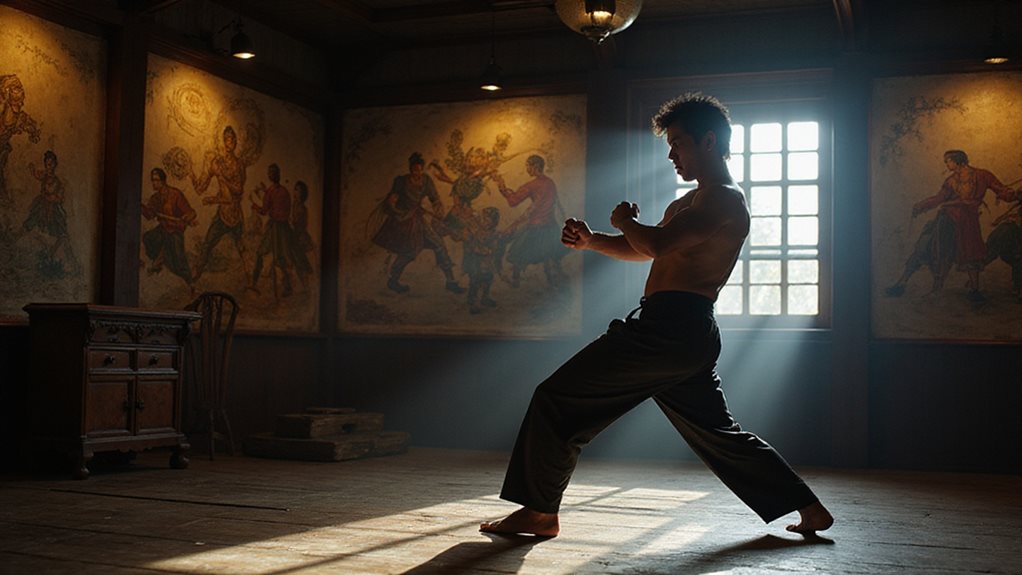
While many believe Dim Mak can incapacitate an opponent with a single touch, this notion often blurs the line between myth and reality. The legendary strikes associated with Dim Mak stem from martial folklore, but the actual effectiveness is frequently overstated.
| Myth | Reality |
|---|---|
| One touch can end a fight | Precision is essential |
| It’s always lethal | Often used for control |
| Anyone can master it quickly | Requires years of training |
Understanding Dim Mak involves grasping these nuances. While pressure points can indeed affect an opponent, the emphasis should be on technique, timing, and context. Recognizing this distinction can enhance your martial arts journey, focusing on discipline and self-awareness.
The Ethical Considerations in Martial Arts
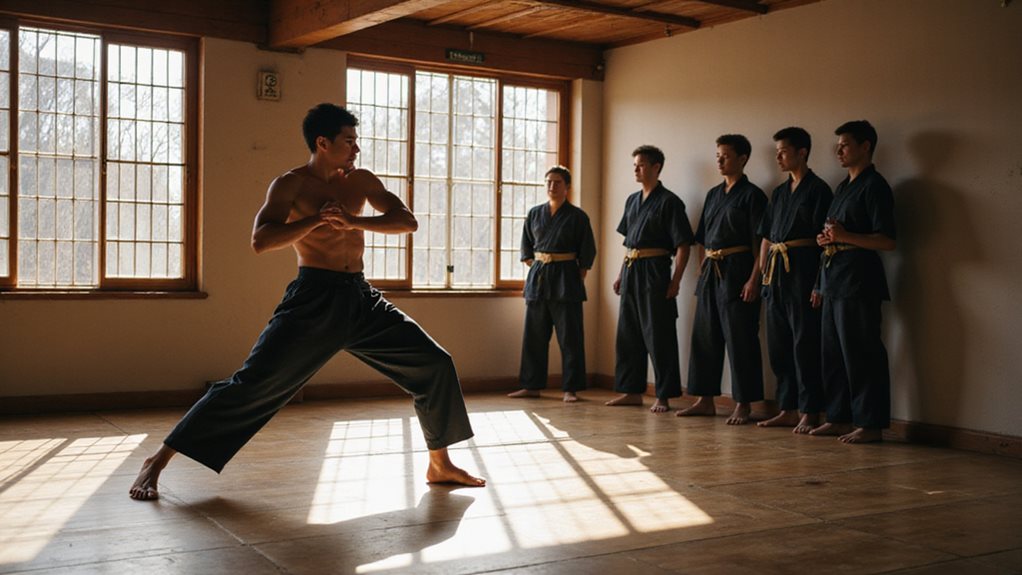
As you explore martial arts, it’s important to contemplate the ethical implications that accompany training and practice.
Engaging in responsibility training is crucial, as it helps you navigate ethical dilemmas that may arise.
Here are four key considerations:
- Intent: Your motives for training should focus on self-improvement, not aggression.
- Respect: Honor your instructors, peers, and opponents, fostering a culture of mutual respect.
- Safety: Prioritize the well-being of yourself and others during practice and sparring sessions.
- Application: Use your skills judiciously; martial arts should be a means of protection, not violence.
Cultivating Inner Peace Through Martial Arts
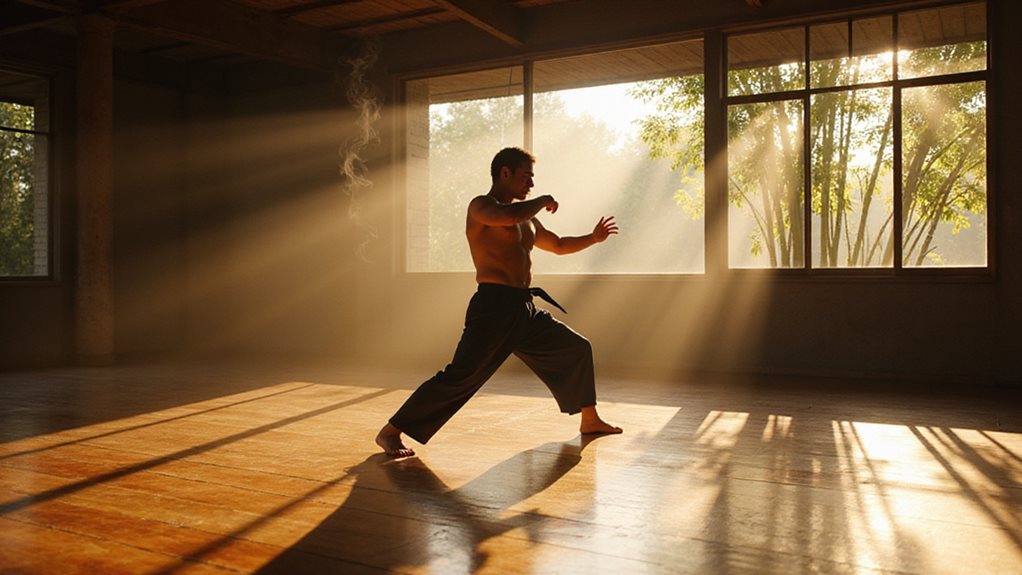
Cultivating inner peace through martial arts hinges on the practice of mindfulness and discipline. By incorporating mindful breathing techniques during training, you enhance your focus and awareness, fostering a profound connection between body and mind.
This practice not only calms your thoughts but also helps you develop emotional resilience. As you encounter challenges in martial arts, you learn to navigate stress and adversity with composure, translating these skills into daily life.
Each movement becomes a meditation, allowing you to release negative emotions and cultivate positivity. Embracing this holistic approach, you discover that martial arts isn’t just about physical prowess, but a pathway to inner tranquility and strength, reinforcing your ability to maintain peace amidst chaos.
Frequently Asked Questions
Can Anyone Learn Dim Mak Techniques Effectively?
Yes, anyone can learn effective techniques through dedicated training methods and consistent practice. By focusing on skill acquisition, you’ll develop the necessary understanding and mastery to execute these concepts with precision and confidence.
What Are the Risks of Practicing Dim Mak?
Practicing pressure point techniques carries significant health risks, including injury or unintended harm. Understanding the historical context of these practices is essential, as it highlights the importance of safety and responsible training in martial arts.
Are There Modern Applications of Dim Mak in Self-Defense?
There are modern adaptations of self-defense techniques focusing on pressure points. You can utilize these methods to incapacitate an attacker effectively, emphasizing precision and control while ensuring safety and minimizing harm in self-defense situations.
How Does Dim Mak Differ From Other Martial Arts Techniques?
Martial arts techniques often emphasize strikes and grappling. In contrast, you focus on pressure points and energy flow with Dim Mak, targeting the body’s energy pathways to incapacitate an opponent effectively, rather than relying solely on brute force.
Are There Famous Practitioners of Dim Mak Today?
You’ll find few famous practitioners of Dim Mak today, as its history often intertwines with folklore. Many martial artists respect its legend, but most focus on practical techniques within recognized disciplines for effective self-defense and training.
Conclusion
In exploring Dim Mak, you uncover not just a martial art, but a path to self-discovery and growth. By understanding the power of pressure points and the importance of ethical practice, you can apply these principles to foster harmony in your life. Remember, it’s not just about striking; it’s about striking a balance. As you commence on this journey, you’ll find that the true strength lies in cultivating inner peace and resilience, transforming your life one mindful step at a time.