


Embrace non-judgmental awareness and let thoughts pass like clouds. Cultivate patience and gently focus on your breath; it anchors you in the present. Accept distractions as part of your journey, practicing self-compassion along the way. Foster curiosity about your sensations and emotions, and stay present in each moment. Remember, meditation isn’t about perfection. It’s about being kind to yourself and honoring your experiences. There’s much more to explore on this enriching path.
Key Takeaways
- Embrace non-judgmental awareness by observing thoughts and feelings without attachment or criticism during meditation sessions.
- Use breath as an anchor to redirect focus and cultivate presence, allowing distractions to pass without interference.
- Let go of expectations and recognize that mistakes are part of the learning journey in meditation practice.
- Cultivate patience by acknowledging emotions and thoughts as they arise, allowing them to unfold naturally.
- Foster curiosity by exploring sensations and experiences in the present moment without clinging to outcomes or judgments.
Embrace Non-Judgmental Awareness
Embracing non-judgmental awareness is essential for deepening your meditation practice. When you cultivate this mindset, you open the door to mindful observation of your thoughts and feelings without labeling them as good or bad.
Instead of resisting what arises, you learn to greet each sensation with compassionate acceptance, allowing yourself to experience the present moment fully. This practice encourages you to observe your mind’s chatter without getting entangled in it.
Greet each sensation with compassionate acceptance, embracing the present moment without becoming entangled in your mind’s chatter.
Each time you notice a judgment, gently guide your focus back to the breath or your chosen anchor. By doing so, you foster a nurturing environment where growth and insight can thrive.
With patience and consistency, non-judgmental awareness will transform your meditation journey, enhancing both clarity and peace.
Allow Thoughts to Pass

As you settle into your meditation, it’s important to recognize that thoughts are like clouds drifting across the sky—temporary and ever-changing.
Allowing thoughts to pass without clinging to them is crucial for achieving mental clarity. When a thought arises, notice it without judgment, then gently redirect your focus back to your breath or anchor point.
This practice helps you observe your thought patterns without getting entangled in them. Instead of wrestling with distractions, let them float away. Each time you let a thought pass, you cultivate a deeper sense of calm and awareness.
Cultivate Patience
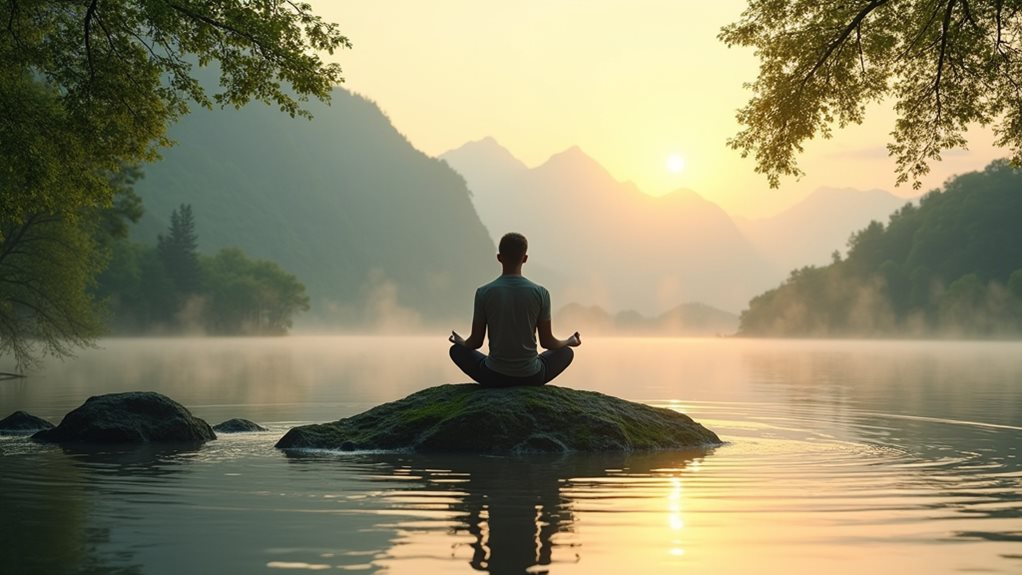
While you navigate the waves of thoughts during meditation, cultivating patience is essential to your practice. Embrace the art of mindful waiting; it’s not about rushing to the end but allowing your thoughts to unfold naturally.
When distractions arise, resist the urge to intervene. Instead, acknowledge them and return your focus gently. This nurturing resilience builds your capacity to remain calm and centered.
Remember, each moment spent in stillness is an opportunity for growth. As you learn to wait patiently for clarity, you’ll find greater depth in your experience.
Cultivating patience transforms your meditation, allowing you to connect more profoundly with yourself and the present moment. Trust the process, and let go of the need for immediate results.
Focus on the Breath
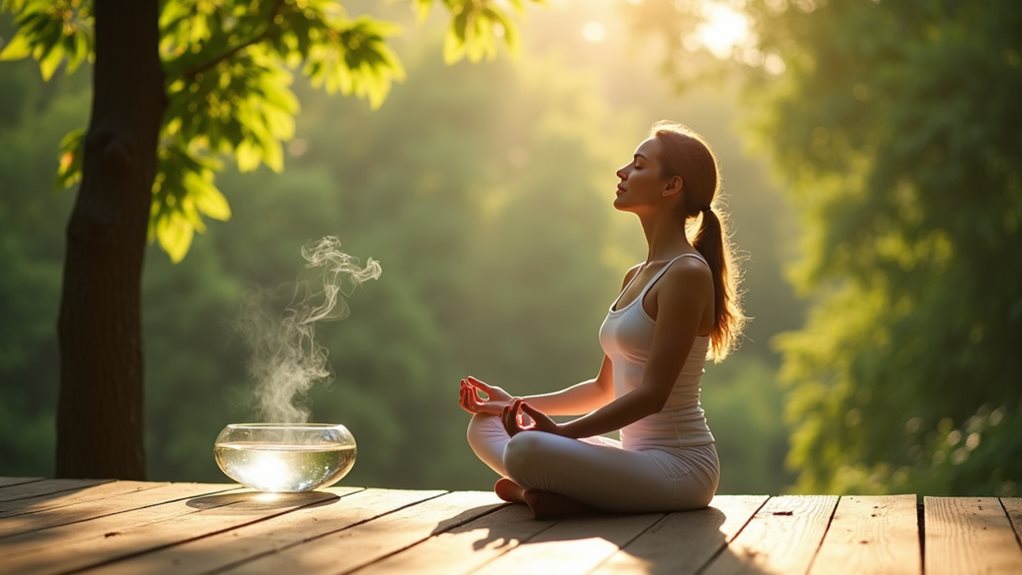
In your meditation practice, focusing on your breath can be a powerful anchor.
As you become aware of each inhale and exhale, try to observe the sensations without judgment, simply allowing them to be.
This gentle awareness helps cultivate a deeper sense of calm and presence.
Breath Awareness Techniques
When you focus on your breath, you anchor yourself in the present moment, allowing thoughts and distractions to drift away.
Breath awareness techniques, like deep breathing and breath counting, can deepen your meditation practice. Here’s how to get started:
- Inhale deeply: Fill your lungs completely, feeling your abdomen rise.
- Exhale slowly: Release your breath gently, allowing tension to melt away.
- Count your breaths: Inhale to a count of four, exhale to a count of six; repeat.
- Stay present: If your mind wanders, gently return your focus to your breath.
Observing Without Judgment
With a solid foundation in breath awareness, you can turn your attention to observing your thoughts without judgment.
In this practice, embrace mindful observation—simply notice your thoughts as they arise, without labeling them as good or bad. Allow yourself to experience a judgment-free awareness, where thoughts drift in and out like clouds in the sky.
As you focus on your breath, remember that it’s natural for your mind to wander; this is part of being human. Gently guide your attention back to your breath, and acknowledge your thoughts without attachment.
This process fosters a sense of peace, allowing you to cultivate a deeper understanding of your mind while nurturing your spirit through compassionate observation.
Accept Distractions as Part of the Process
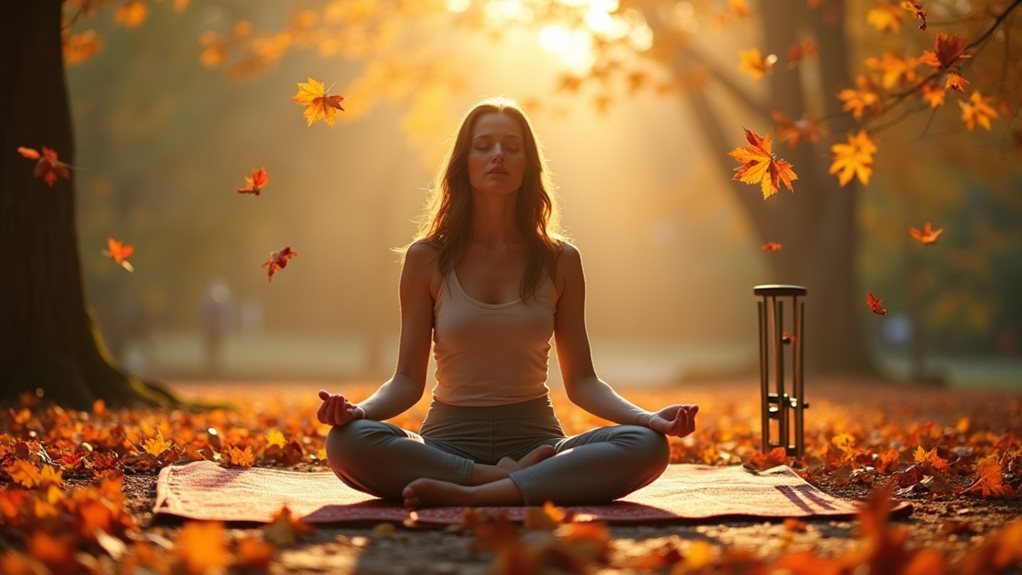
Distractions are a natural part of your meditation journey, so it’s important to embrace them without judgment.
When thoughts arise, simply observe them and allow them to pass, returning your focus gently to your breath.
This process not only enhances your practice but also cultivates a deeper sense of acceptance and calm.
Embrace Mental Fluctuations
As you settle into meditation, it’s natural for your mind to wander and fluctuate, a reminder that distractions are an inherent part of the practice. Embracing these mental fluctuations fosters mental acceptance and cultivates cognitive flexibility.
Instead of resisting distractions, allow them to be part of your experience.
- Acknowledge wandering thoughts without judgment.
- Gently guide your focus back to your breath.
- Understand that fluctuating thoughts don’t diminish your practice.
- Appreciate the lessons distractions can teach about your mind.
Observe Without Judgment
When you notice your thoughts drifting during meditation, it’s essential to recognize that this is a natural part of the process. Instead of fighting these distractions, practice mindful observation.
Acknowledge each thought or feeling as it arises, observing it without judgment. This compassionate awareness allows you to create space for whatever comes up, without attaching significance to it.
You might find your mind wandering to a to-do list or past memory; that’s okay. Simply notice these distractions, gently acknowledging them, then return your focus.
Return to Breath
While meditating, returning to your breath serves as a grounding anchor amidst the ebb and flow of thoughts. It’s natural for distractions to arise, but embracing them can enhance your practice. When you notice your mind wandering, gently redirect your focus back to your breath.
- Use breath counting to help maintain this focus.
- Engage in mindful breathing to deepen your awareness.
- Acknowledge distractions without judgment; they’re part of the journey.
- Allow yourself to feel the fullness of each inhale and exhale.
This process isn’t about perfection; it’s about cultivating a space where you can simply be.
With each return to your breath, you strengthen your connection to the present moment.
Let Go of Expectations

Letting go of expectations is essential for deepening your meditation practice, as it opens the door to genuine experiences. When you surrender expectations, you create space for your true self to emerge. Instead of aiming for a specific outcome, embrace whatever arises during your sessions. This shift allows you to fully engage in the moment.
| How to Let Go | Benefits |
|---|---|
| Breathe deeply | Greater clarity |
| Release tension | Enhanced awareness |
| Accept thoughts | Increased tranquility |
| Trust the process | Deeper connection to self |
As you practice, remind yourself that meditation isn’t about perfection; it’s about being present. Allow your journey to unfold naturally, free from the weight of expectations.
Practice Self-Compassion

As you navigate your meditation journey, remember to embrace the imperfections that arise.
Cultivating patience with yourself allows for a more genuine connection to your practice, while acknowledging your feelings fosters understanding and growth.
Embrace Imperfection in Practice
When you embrace imperfection in your meditation practice, you’re not just allowing space for growth; you’re also nurturing a compassionate relationship with yourself.
It’s essential to recognize that mistakes are part of the journey. Instead of criticizing yourself, try to:
- Embrace mistakes as valuable learning opportunities.
- Celebrate progress, no matter how small.
- Acknowledge that each session is unique, with its own challenges.
- Allow yourself to be human, free from harsh judgments.
Cultivate Patience With Yourself
Embracing imperfection naturally leads to cultivating patience with yourself. As you navigate your self-acceptance journey, remind yourself that growth isn’t always linear. You’ll encounter obstacles, and that’s perfectly okay. Allow yourself these moments as gentle reminders that you’re human.
Each time you practice meditation, approach it with kindness rather than judgment. If thoughts wander or emotions arise, acknowledge them without criticism; it’s all part of the process. Recognize that self-compassion is essential to your journey.
You’re not alone in feeling frustrated or distracted, and these feelings don’t define your worth. By nurturing patience within, you create a space for healing and understanding, making your meditation practice more enriching and profound.
Trust the journey, and be gentle with yourself.
Acknowledge Your Feelings
Acknowledging your feelings is a vital step in practicing self-compassion, especially during meditation. By embracing your emotional experiences, you create space for healing and growth.
Remember, emotional acknowledgment and feelings validation are essential to your practice. Here are some ways to honor your feelings:
- Notice your emotions without judgment; simply let them be.
- Reflect on the causes of these feelings to understand their origins.
- Practice self-talk that’s kind and supportive when emotions arise.
- Allow yourself to feel deeply, knowing it’s a natural part of being human.
Foster a Sense of Curiosity
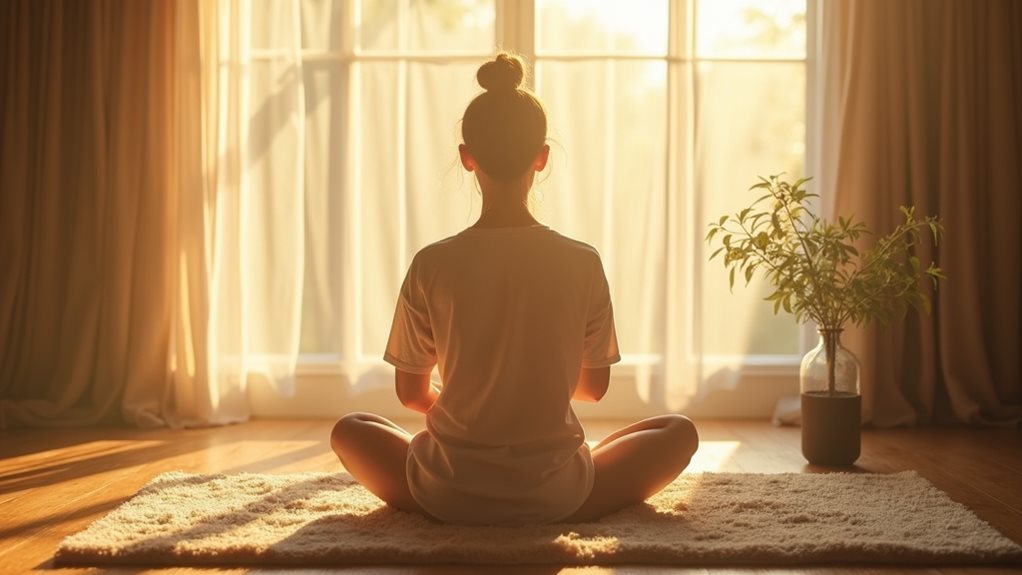
As you settle into your meditation practice, nurturing a sense of curiosity can transform your experience. Embrace this curiosity as an invitation for exploration. Allow yourself to wonder about the sensations arising within you, the thoughts that drift by, and the emotions that surface.
Instead of judging or clinging to these experiences, approach them with a sense of mindfulness discovery. What happens when you observe without attachment? How do your breath and body respond to this exploration?
Stay Present in the Moment

Curiosity naturally leads you to the present moment, where true meditation unfolds.
To stay present, cultivate mindful awareness by focusing on the here and now. Here are a few techniques to help you:
- Breathe deeply and notice each inhale and exhale.
- Observe your surroundings without judgment; let sounds, sights, and sensations be your anchors.
- Acknowledge any thoughts that arise, and gently guide your attention back to the present moment.
- Embrace the sensations in your body, feeling every muscle and joint as they are.
Integrate Mindfulness Into Daily Life
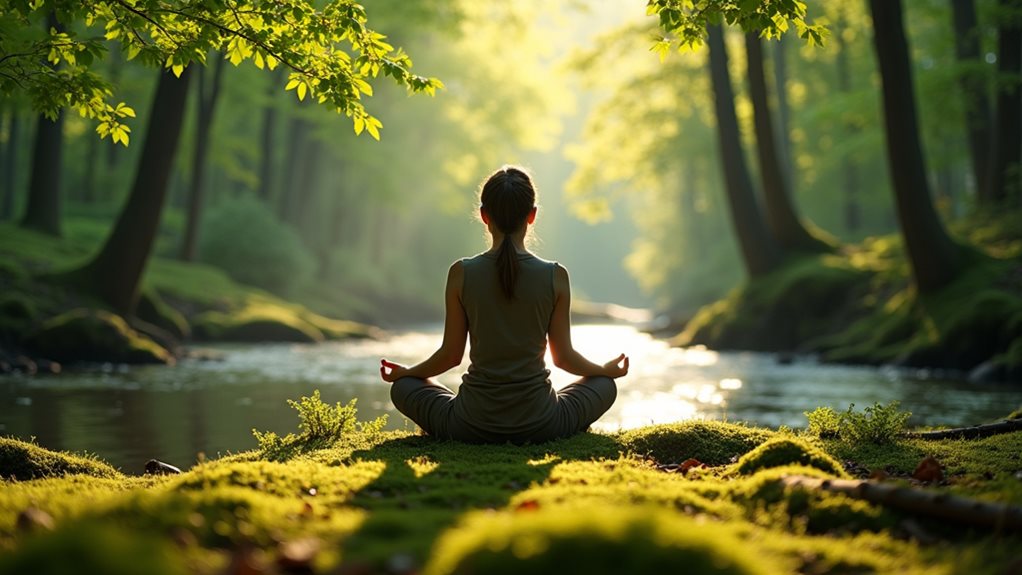
How can you weave mindfulness into your daily routines? Start with mindful eating; savor each bite, focusing on flavors and textures. This practice transforms meals into moments of awareness, helping you connect with your body’s hunger and fullness cues.
Next, embrace gratitude journaling. Set aside a few minutes each day to jot down what you’re thankful for. This simple act shifts your perspective, fostering positivity and appreciation for the present.
Incorporate mindfulness into activities like walking or washing dishes—notice the sensations and sounds around you. By integrating these practices, you create a calming rhythm in your day, nurturing a deeper connection with yourself and the world.
Mindfulness isn’t a destination; it’s a way of living fully.
Frequently Asked Questions
How Long Should I Meditate Each Day for Best Results?
To achieve the best results, aim for a daily duration of 15 to 30 minutes. Find ideal timing that suits you, whether in the morning or evening, and remain consistent for lasting benefits.
Can Meditation Help With Anxiety and Stress Management?
Yes, meditation can greatly help with anxiety and stress management. By practicing mindfulness techniques and relaxation methods, you’ll cultivate inner peace, enhance your emotional resilience, and create a calmer, more balanced mindset in daily life.
What if I Can’t Find a Quiet Space to Meditate?
“Where there’s a will, there’s a way.” Even in public spaces with background noise, you can find moments to breathe deeply, focus inward, and practice mindfulness. Embrace the chaos; it can enhance your meditation experience.
Is Guided Meditation Better Than Self-Led Practice?
It really depends on your personal preferences. Guided sessions can provide structure and support, while self-led practice fosters independence and exploration. Try both to see which resonates more with your meditation journey.
How Do I Know if I’M Meditating Correctly?
You’ll know you’re meditating correctly when you feel present and centered. Explore various meditation techniques, and integrate mindfulness practices into your daily life. Trust your intuition—there’s no right or wrong way to experience meditation.
Conclusion
In your journey of meditation, remember that it’s all about the journey, not the destination. Embracing noninterference allows you to float gently on the river of your thoughts, observing without judgment. As you cultivate patience and curiosity, you’ll find that each session deepens your awareness and connection to the present moment. By integrating mindfulness into daily life, you’ll weave these principles seamlessly into your routine, enriching both your meditation practice and your overall well-being.
