


Growth and evolution are intricate processes marked by an interplay of resilience, cellular metabolism, and transformative experiences. Cellular metabolism, essential for energy production and sustaining life, underscores the biological aspect of growth. Embracing destruction, whether through spiritual frameworks or personal challenges, acts as a catalyst for renewal and development. Various cultural perspectives highlight how destruction fosters growth, revealing deeper insights into personal evolution. Exploring these dynamics uncovers pathways for continuous transformation and understanding of growth.
Key Takeaways
- Embrace a growth mindset, viewing challenges and failures as opportunities for learning and personal development.
- Understand cellular metabolism as crucial for sustaining life, facilitating energy production for growth and repair.
- Recognize the role of destruction as a catalyst for renewal and transformation in both biological and spiritual contexts.
- Explore comparative perspectives on destruction, such as Hinduism’s cyclical view and Christianity’s emphasis on resurrection, for deeper understanding.
- Integrate spiritual laws like the Law of Attraction to enhance self-awareness and foster resilience in your personal growth journey.
Understanding the Concept of Growth
Growth, as a fundamental concept, encompasses an increase in size, complexity, and overall development towards maturity.
In the domain of personal development, fostering a growth mindset is pivotal. This mindset encourages individuals to embrace challenges and view failures as opportunities for learning. Empirical studies demonstrate that those with a growth mindset are more resilient, adaptable, and open to feedback, which enhances their capacity for personal growth.
Furthermore, understanding growth involves recognizing that it is often accompanied by setbacks and mistakes, which are integral to the learning process. Consequently, growth is not merely linear but a complex journey toward self-improvement and maturity.
The Role of Cellular Metabolism in Life

Cellular metabolism serves as the cornerstone of life, underpinning the intricate processes that sustain organisms at the cellular level.
This complex network encompasses cellular respiration and energy synthesis, enabling cells to convert nutrients into usable energy. Through catabolic pathways, molecules are broken down, releasing energy needed for essential functions.
Cellular metabolism intricately transforms nutrients into energy, driving essential functions through catabolic and anabolic pathways.
Conversely, anabolic processes utilize this energy to synthesize necessary compounds, facilitating growth and repair. The interplay of these metabolic pathways is critical for maintaining homeostasis and supporting the organism’s overall vitality.
Consequently, cellular metabolism is not merely a biochemical process; it is fundamental to the survival and evolution of life itself.
Embracing Destruction as a Pathway to Growth
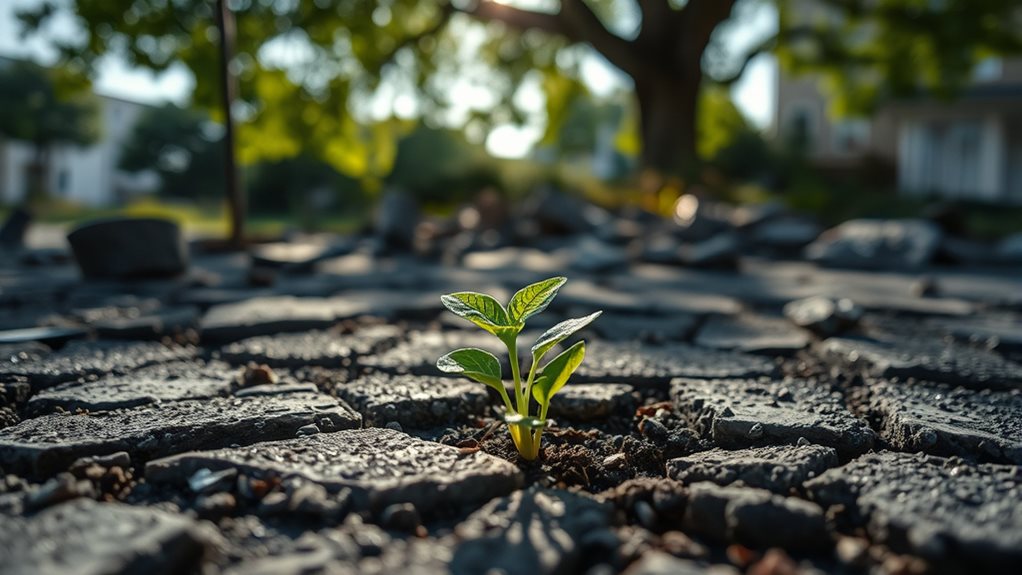
Destruction, often perceived with apprehension, serves as an essential catalyst for growth within various biological and spiritual frameworks. Embracing a growth mindset encourages individuals to recognize that destructive transformation can lead to renewal and development. This process illustrates that errors and dissolution are integral to the learning experience, ultimately fostering resilience and adaptability.
| Aspect | Destructive Transformation | Growth Mindset |
|---|---|---|
| Definition | Process of dissolution | Belief in development |
| Role in Growth | Facilitates renewal | Encourages learning |
| Perception | Often viewed negatively | Embraced positively |
| Outcome | Regeneration | Enhanced potential |
Comparative Perspectives on Destruction in Hinduism and Christianity
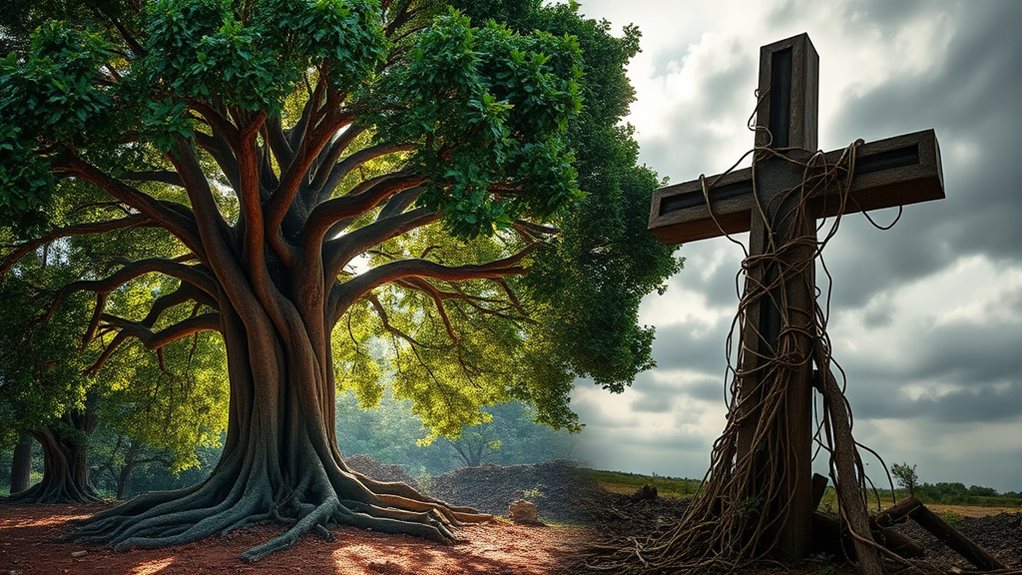
While both Hinduism and Christianity acknowledge the significance of destruction in the context of growth and renewal, their interpretations diverge markedly in philosophical and theological dimensions.
- Hinduism views destruction through the lens of Shiva, emphasizing ego dissolution and spiritual transformation.
- Christianity focuses on the resurrection, portraying destruction as a precursor to eternal life.
- Destruction dynamics in Hinduism celebrate the cyclical nature of existence, while Christianity emphasizes a linear progression.
- Both traditions recognize destruction’s role in facilitating personal growth, albeit through differing narrative frameworks.
Understanding these perspectives enriches the discourse on how destruction contributes to spiritual evolution.
Integrating Spiritual Laws for Personal Development

How can individuals effectively harness spiritual laws to facilitate personal development? By achieving spiritual alignment, individuals can engage with universal laws that govern growth and transformation.
This alignment fosters personal transformation by encouraging self-awareness, resilience, and adaptability. The integration of spiritual laws, such as the Law of Attraction and the Law of Cause and Effect, creates a framework for understanding one’s experiences and choices.
Empirical evidence suggests that those who consciously apply these principles demonstrate improved emotional well-being and enhanced life satisfaction.
Consequently, the intentional integration of spiritual laws serves as a catalyst for meaningful personal development.
Frequently Asked Questions
How Can I Recognize My Personal Growth Milestones?
To recognize personal growth milestones, individuals should engage in self-reflection practices, evaluating their emotional responses and behavioral changes. Growth indicators, such as increased resilience and enhanced self-awareness, can provide empirical evidence of one’s development journey.
What Are Common Mistakes in the Growth Process?
Mistakes in the growth process, often as monumental as a collapsing skyscraper, include allowing fear barriers to overshadow achievements. These errors, while intimidating, are essential for learning and eventual progress, fostering resilience and deeper understanding.
How Does Trauma Influence Growth and Evolution?
Trauma greatly impacts growth and evolution, often catalyzing trauma recovery and resilience building. Individuals may develop coping mechanisms, leading to enhanced emotional strength and adaptability, ultimately fostering deeper personal growth and a greater understanding of life’s complexities.
Can Growth Occur Without Conscious Effort?
Like a seed germinating in the dark, growth can indeed occur without conscious effort. Unconscious development fosters passive evolution, allowing individuals to progress naturally, often influenced by experiences and environments beyond their immediate awareness.
What Role Do Relationships Play in Personal Growth?
Relationships serve as essential support systems in personal growth, enhancing emotional intelligence through shared experiences. They facilitate learning, provide feedback, and foster resilience, thereby contributing greatly to an individual’s developmental journey and adaptive capacities.
Conclusion
In summary, the intricate interplay of growth and destruction reveals profound insights into the human experience. Just as a phoenix rises from the ashes, transformation is rooted in the acceptance of change, highlighting the necessity of destruction in fostering new beginnings. By integrating biological principles and diverse philosophical perspectives, individuals can navigate their personal evolution with awareness and intention, unearthing the secrets of their journey. Ultimately, embracing these dynamics empowers one to thrive amidst life’s complexities and uncertainties.
