

You can approach why bad things happen to good people through five coherent spiritual laws: karma (intentions yield consequences across time), free will (moral agency situates responsibility), sowing and reaping (reciprocity translates actions into harvests), impermanence (acceptance reframes suffering), and unity/compassion (interdependence calls for restorative solidarity). Each law offers diagnostic categories and pragmatic prescriptions—ethical repair, cultivated insight, and communal accountability—that clarify meaning and guide response if you want to learn more about coping wisely today.
The Law of Karma (Cause and Effect)

Although karma often gets reduced to moral bookkeeping, you should understand it first as a principled account of moral causality: intentions, actions, and dispositions generate consequences that shape individual and collective circumstances across time.
You analyze karmic sequences as structured feedback: volitional states produce habitual consequences that recur until they’re transformed. Scholarly exegesis traces mechanisms—psychic imprint, social ripple, and transpersonal continuity—allowing you to read present hardship as potentially arising from past life patterns or from intersubjective entanglements.
That reading doesn’t imply fatalism; it prescribes method. You pursue intentional restitution—conscious repair through ethical action, reparative practice, and cultivated insight—to terminate maladaptive cycles.
In this framework suffering signals information: it prompts inquiry, responsibility, and disciplined remediation rather than moral condemnation. You thereby refine character and relationality.
The Law of Free Will and Moral Agency

Because God or the cosmos grants genuine choice, the Law of Free Will locates moral responsibility within human agency rather than divine orchestration, and you should read suffering often as the foreseeable outcome of autonomous wills interacting in a contingent world.
You must interpret misfortune as a consequence of choices—individual, institutional, or collective—without reducing complex causality to simple blame. This perspective preserves human dignity by insisting that moral responsibility accompanies freedom, and it frames suffering as a prompt for ethical reflection.
You examine scripture, philosophy, and lived experience exegetically to discern patterns that inform conscience development and discernment.
In practice, you weigh intent, capability, and context, recognizing that freedom enables virtue and error, and that accountability structures mitigate harm. You cultivate communal ethical accountability.
The Law of Sowing and Reaping (Reciprocity)

If the Law of Free Will locates responsibility in human agency, the Law of Sowing and Reaping provides the moral economy that translates choices into consequences. You examine scripture and ethical theory to see how intentional acts seed future outcomes: benevolence tends toward abundant returns, neglect or harm toward scarcity or pain.
In exegetical terms, this law describes structured harvest cycles rather than arbitrary reward or punishment; it frames suffering and blessing as emergent from aggregated human conduct and communal structures. You should read moral reciprocity not as simplistic quid pro quo but as a normative account explaining correlation between disposition, action, and consequence.
Practically, this perspective urges you to cultivate virtuous habits so future harvests align with justice and mercy too.
The Law of Impermanence and Acceptance

When you examine the Law of Impermanence through scriptural, philosophical, and contemplative lenses, it reveals a diagnostic framework: permanence is a cognitive projection that conflicts with phenomena’s transient nature, and acceptance functions as the ethical response that reorients agency and suffering. You analyse texts and practices to show how mindful surrender dissolves clinging to transient attachments, reframing loss as data for moral agency. You critique consolatory platitudes, privileging disciplined attention, hermeneutic parsing, and coherent praxis that reduce existential distress. Practically, you cultivate acceptance without resignation, discerning when to act and when to yield, hence transforming suffering into disciplined growth.
| Aspect | Response |
|---|---|
| Impermanence | Observe |
| Attachment | Release |
| Acceptance | Deliberate |
| Practice | Integrate |
You consequently rehearse lucid acceptance, applying discernment to suffering while maintaining ethical responsiveness and compassion.
The Law of Unity and Compassion

Often overlooked in analytic treatments of suffering, the Law of Unity and Compassion insists that reality isn’t a collection of isolated selves but a web of interdependent agents, and that ethical response flows from that ontological insight.
The Law of Unity and Compassion reframes suffering: we are interdependent, requiring collective ethical response
You examine suffering through communal lenses: your pain reflects shared vulnerability, and your response shapes collective outcomes. Apply the principle practically:
- Recognize interdependence and promote interconnected healing through shared testimony and mutual aid.
- Translate empathy into systems by instituting compassionate action in policy, caregiving, and ritual.
- Hold perpetrators and structures accountable while restoring victims, balancing justice with restorative solidarity.
This law reframes misfortune as a prompt for social transformation, where individual consolation and structural reform proceed together.
You thereby participate in mutual redemption and ethical repair.
Frequently Asked Questions
Why Do Innocent Children Suffer From Congenital Illness?
You confront congenital illness as multifactorial: genetics, environment, stochastic development; theological readings probe meaning, yet analysis doesn’t assign simplistic blame. ‘Innocence questioned’ appears socially, provoking ‘parental guilt’, which scholarship reframes as communal responsibility and imperatives
Is There Proof Any Spiritual Law Objectively Exists?
No; while a longitudinal study of Tibetan meditators showed neural changes suggesting spiritual experience, you won’t find conclusive spiritual evidence or empirical validation proving objective spiritual laws—interpretation remains philosophical, methodological, and contested across disciplines
Can Rituals or Prayers Avert Personal Tragedies?
Yes, you can sometimes influence outcomes via ritual and prayer, but scholars don’t claim certainty; ritual efficacy is context-dependent; your prayer outcomes correlate with community support, priming, and socioreligious structures rather than proving causal prevention.
How Should Legal Systems Respond to Systemic Evil?
You’ll demand institutional accountability through transparent reforms, prosecutions, and rigorous structural audits, while implementing restorative justice programs that prioritize victims’ needs, communal healing, reparations, and systemic prevention, grounded in evidence, moral reasoning, and legal precedent.
What Practical Steps Help Someone Immediately Grieving?
You’re advised to enact grief rituals and use comfort objects, analyze feelings systematically, record reflections, seek structured social support, and consult ritualized practices and therapeutic guidance to contextualize loss, fostering embodied processing and gradual integration.
Conclusion
You’ll find these spiritual laws don’t erase suffering but reframe it as a grammar for meaning; like a map showing contours of a storm. You can analyze karma, free will, reciprocity, impermanence, and unity as propositions that explain consequence, choice, balance, transience, and interconnection. You’ll hold contradictions with disciplined compassion, parsing texts and experience to reconstruct purpose. By engaging these principles, you reclaim interpretive agency and translate pain into disciplined insight and ethical action now.
Take The Next Step
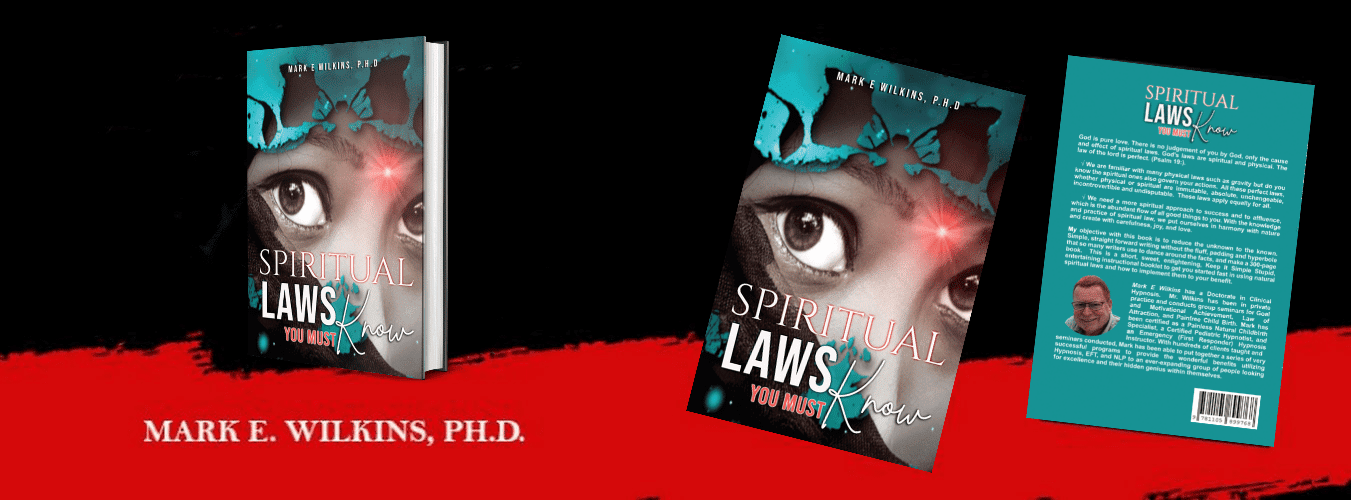
Mark’s latest book “Spiritual Laws You Must Know” is available on on Amazon. Now in Audio book form. Be sure to purchase two copies and give one to a friend, you do reap what you sow!