


Considering the ethical implications of spiritual practices matters because it influences how you connect with cultural traditions and engage with communities. Approaching these practices mindfully helps you avoid appropriation, fostering appreciation instead. You’ll also reflect on the impacts of commercialization and power dynamics, enriching your spiritual journey. This awareness prompts a deeper understanding of your intentions, ultimately shaping experiences. Exploring these dimensions can reveal more about your personal growth and the collective spiritual landscape.
Key Takeaways
- Understanding ethical implications fosters respect and honors the cultural origins of spiritual practices, avoiding appropriation and exploitation.
- Reflecting on motivations ensures genuine engagement with spiritual practices, preventing superficiality and commercialization.
- Ethical mindfulness promotes authentic mental health benefits by respecting the origins and intentions of practices.
- Transparency in power dynamics encourages accountability and inclusivity, strengthening community trust and engagement.
- Balancing personal beliefs with communal rituals enhances spiritual experiences and fosters meaningful connections within diverse communities.
Understanding Cultural Appropriation in Spiritual Practices
How do we navigate the fine line between appreciation and appropriation in spiritual practices? To engage meaningfully, you must cultivate cultural sensitivity, recognizing the rich traditions behind spiritual practices.
Ask yourself: Are you honoring the source or merely borrowing elements for aesthetic pleasure? Spiritual authenticity relies on understanding the deeper significance of rituals and symbols, not just their surface appeal.
When you adopt practices from other cultures, consider whether you’re amplifying voices or erasing them. How does your involvement affect the originating community?
The Impact of Commercialization on Authentic Spiritual Experiences

While commercialization can offer accessibility to various spiritual practices, it often distorts their authenticity and meaning. You might find yourself drawn to trendy yoga classes or wellness retreats, but have you considered what’s lost in this spiritual commodification?
Commercialization of spiritual practices can compromise their authenticity, leading to a superficial connection rather than genuine growth.
When practices are packaged and sold, the focus shifts from genuine experiences to profit margins. This can lead to a superficial engagement, making it harder to establish an authentic connection to the teachings and communities behind these practices.
How do you navigate this landscape without sacrificing depth for convenience? Reflecting on your motivations can help you discern whether you’re seeking true spiritual growth or merely consuming a product.
In a world of instant access, authenticity becomes a valuable pursuit worth aiming for.
Mindfulness and Mental Health: Ethical Considerations

The commercialization of spiritual practices often leads to a diluted understanding of their deeper significance, particularly in the context of mindfulness and mental health.
As you explore mindfulness benefits, it’s vital to contemplate ethical mindfulness—how these practices can be promoted responsibly. Are you aware of the potential risks when mindfulness is oversimplified or misrepresented? It could inadvertently contribute to unrealistic expectations about mental health improvement.
Additionally, spiritual ethics come into play when evaluating who profits from these practices and whether they genuinely serve those in need. Engaging with mindfulness requires a commitment to authenticity and respect for its origins.
How can you guarantee that your approach to mindfulness not only enhances your mental health but also promotes ethical mindfulness practices in your community?
Respecting Diverse Traditions and Their Origins
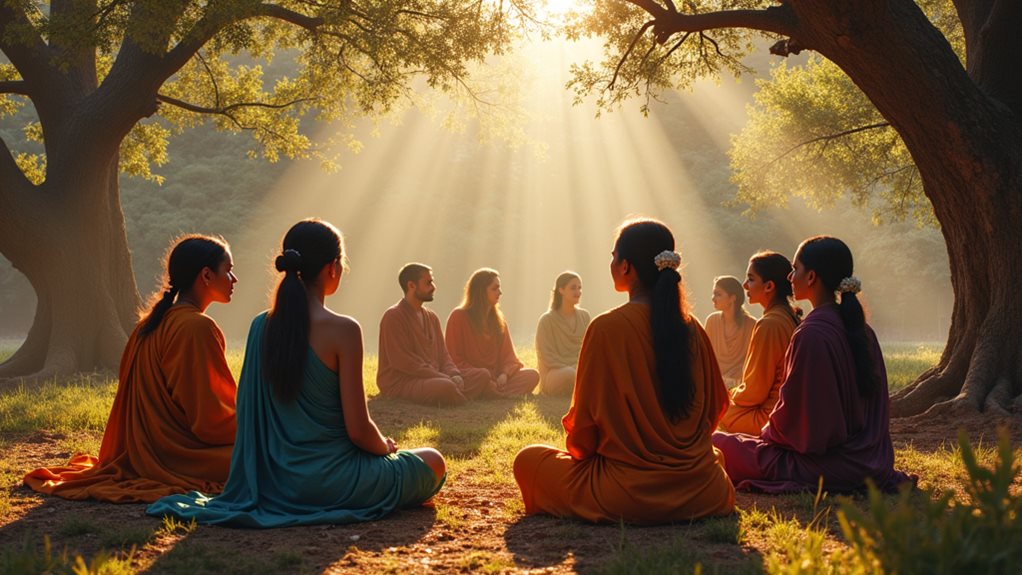
When you engage with spiritual practices, do you consider the cultural heritage that shapes them?
Understanding the historical context behind these traditions can enrich your experience and foster genuine respect.
How can celebrating spiritual diversity enhance your own journey while honoring the origins of these practices?
Acknowledging Cultural Heritage
Acknowledging cultural heritage not only enriches our understanding of spiritual practices but also invites us to reflect on our own beliefs and values.
When you explore the cultural significance of various traditions, you uncover layers of meaning that often challenge your perspectives. How do these practices resonate with your values, and what can you learn from their origins?
It’s essential to contemplate the role of heritage preservation in maintaining these traditions. As you engage with diverse spiritual practices, you must ask yourself: Are you honoring the roots from which they sprang?
Understanding Historical Context
Understanding the historical context of spiritual practices reveals how deeply intertwined they’re with the cultures and societies from which they emerge. By examining historical influences, you can appreciate how these practices have evolved over time.
Each tradition carries the weight of its origins, shaped by social, political, and economic conditions. This evolution isn’t just a timeline; it’s a complex interplay of beliefs and rituals responding to changing environments.
Asking why certain practices developed can lead you to explore their ethical implications today. How do these historical narratives inform your understanding of spirituality?
Recognizing the roots of these practices fosters a respect for diversity and encourages a more thoughtful approach to spiritual engagement in our increasingly interconnected world.
Celebrating Spiritual Diversity
While exploring spiritual diversity, you might find that respecting the unique origins and traditions of various practices enriches your understanding of the human experience.
Engaging in cultural celebrations allows you to appreciate the depth and nuance of different faiths, fostering a sense of connection with others. How can these experiences inform your own spiritual journey?
Participating in interfaith dialogues opens doors to new perspectives, challenging your assumptions and broadening your worldview. By honoring diverse traditions, you not only acknowledge their historical significance but also contribute to a more inclusive society.
The Role of Power Dynamics in Spiritual Communities
In spiritual communities, power dynamics often shape relationships and influence practices in profound ways. You might notice how power imbalances can lead to a concentration of spiritual authority, impacting ethical leadership.
Are leaders practicing transparency, and do they implement accountability measures? Without these, informed consent can become elusive, undermining community engagement.
Consider how inclusive governance encourages shared responsibility; it can foster an environment where everyone feels valued and heard.
Conflict resolution mechanisms are essential, too. They should address grievances arising from unequal power dynamics, ensuring that all voices contribute to decision-making.

When you consider the distinctions between religion and spirituality, what nuances emerge in your understanding?
You might find yourself grappling with issues like cultural appropriation and the balance between personal and collective practices.
How do these factors shape your own spiritual journey and ethical considerations?
Defining Religion vs. Spirituality
The distinction between religion and spirituality often blurs, prompting deeper inquiry into what each term truly signifies. You might wonder how they differ and overlap. Here are three key points to contemplate:
- Religious Beliefs: Religion typically encompasses organized systems of beliefs, rituals, and community practices aimed at understanding the divine.
- Spiritual Experiences: Spirituality, on the other hand, often reflects individual journeys toward personal meaning, transcending the confines of formal doctrine.
- Interconnection: While your religious beliefs may provide a framework, your spiritual experiences can offer personal insights that challenge or enrich those beliefs.
As you navigate this intersection, ponder how your own views shape your understanding of both concepts, and how they inform ethical considerations in spiritual practices.
Cultural Appropriation Concerns
While exploring the rich tapestry of spiritual practices, you may encounter the contentious issue of cultural appropriation, which raises important ethical questions. Are you being culturally sensitive, or are you inadvertently participating in appropriation? Developing appropriation awareness is vital as you navigate the intersection of religion and spirituality. Consider the implications of adopting elements from cultures that aren’t your own, especially those historically marginalized.
| Cultural Appropriation | Cultural Sensitivity |
|---|---|
| Exploits cultural elements | Respects and honors them |
| Lacks understanding | Acknowledges context |
| Can perpetuate stereotypes | Fosters genuine dialogue |
| Often focuses on aesthetics | Values cultural heritage |
| Ignores power dynamics | Recognizes historical injustices |
Reflect on these distinctions to guarantee your spiritual journey is respectful and informed.
Personal vs. Collective Practices
As you explore spiritual practices, you may grapple with the tension between personal beliefs and collective rituals. Balancing these aspects can challenge your understanding of spirituality.
Consider these key points:
- Integration: How do your individual beliefs complement or conflict with communal rituals? Finding harmony can enhance your spiritual experience.
- Authenticity: Are you participating in rituals that resonate with your values, or are you conforming to external expectations? Authentic involvement fosters deeper connections.
- Impact: Reflect on how your personal practices influence group dynamics. Do they uplift the community, or do they create division?
Navigating this intersection requires introspection and a willingness to engage with others, fostering a richer spiritual journey that honors both your individuality and the collective.
The Importance of Intent in Spiritual Practices

Understanding the significance of intent in spiritual practices can illuminate how these activities impact both the practitioner and the broader community. When you engage in intentional practices, you’re not just going through the motions; you’re fostering mindful engagement that aligns with your values.
This authenticity assessment guarantees that your spiritual journey contributes to personal growth and encourages ethical mindfulness. By exploring reflective spirituality, you can identify how your intentions shape your experiences.
Are your conscious rituals creating transformative experiences for yourself and others? Delving into these questions helps you understand the deeper implications of your spiritual endeavors.
Exploring the impact of your rituals reveals the profound effects they can have on both your journey and the community.
Ultimately, recognizing the importance of intent can lead to a more meaningful connection with your practices, enhancing both your life and the lives of those around you.
Ethical Consumption of Spiritual Goods and Services

When you consider the ethical consumption of spiritual goods and services, you might start questioning not just what you buy, but the broader implications of those purchases.
Are you aware of how your choices affect the spiritual community and the environment? Here are three factors to ponder:
- Ethical Sourcing: Are the materials and products sourced sustainably, respecting both the planet and the artisans involved?
- Spiritual Accountability: Do the services you engage with promote genuine spiritual growth or merely capitalize on trends?
- Cultural Sensitivity: Are you engaging with spiritual practices that honor their origins, or are you appropriating them without understanding their context?
Understanding these aspects can deepen your spiritual journey and foster a more conscientious approach to your consumption.
Building Inclusive Spaces for Spiritual Exploration
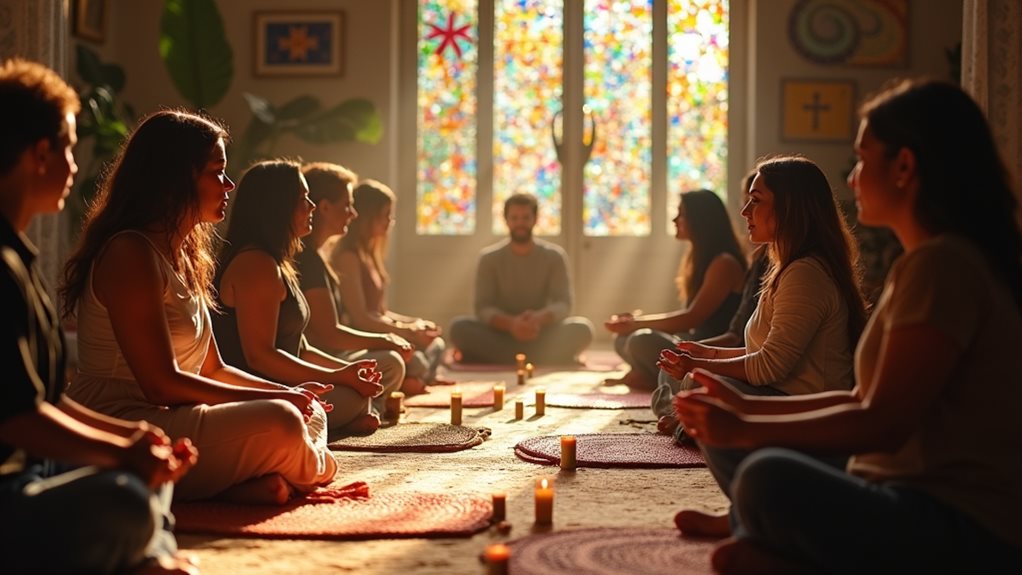
When considering inclusive spaces for spiritual exploration, how do you guarantee that a variety of spiritual perspectives are represented and respected?
Accessibility in practices often becomes a pivotal point—what barriers might you inadvertently create that prevent others from engaging?
Reflecting on these questions can help you cultivate an environment where everyone feels welcome to explore their spirituality.
Diverse Spiritual Perspectives
Many individuals today seek diverse spiritual perspectives, recognizing that a rich tapestry of beliefs can enhance personal growth and community cohesion.
Engaging in interfaith dialogue fosters understanding and respect, allowing you to explore the nuances of various traditions.
To cultivate spiritual pluralism, consider these three aspects:
- Open-mindedness: Embrace different beliefs without judgment, allowing for deeper connections and insights.
- Active Listening: Prioritize understanding others’ experiences and viewpoints, which enriches your own spiritual journey.
- Shared Practices: Participate in communal rituals or discussions that celebrate diversity, strengthening bonds within your community.
Accessibility in Practices
Creating accessible spiritual practices is essential for fostering inclusive spaces where everyone feels welcome to explore their beliefs.
But what does accessibility truly mean in this framework? It involves providing accessible resources that cater to diverse needs, ensuring that everyone can engage meaningfully.
Are your practices designed to accommodate individuals with different abilities, backgrounds, or experiences?
Using inclusive language is another key aspect; it helps create a sense of belonging. Are you mindful of the words you choose, avoiding jargon or exclusionary terms?
By critically examining these elements, you can cultivate a spiritual environment that resonates with all.
Ultimately, how can you enhance accessibility in your practices to invite deeper exploration and connection among all participants?
The Responsibility of Sharing Spiritual Knowledge

As you explore the domain of spiritual practices, you quickly realize the weight of your responsibility in sharing spiritual knowledge. This isn’t just about disseminating information; it’s about upholding spiritual integrity.
Consider these aspects:
- Authenticity: Are you sharing knowledge that resonates with your own understanding and experiences? Authenticity fosters trust.
- Context: Do you provide context for the practices you share? Misinterpretation can lead to harmful consequences.
- Empowerment: Are you empowering others to think critically about their spiritual journeys? Encouraging personal exploration promotes growth.
Navigating these questions helps guarantee that your knowledge dissemination aligns with ethical standards.
Ultimately, the responsibility lies with you to share thoughtfully, ensuring that your impact is positive and enriching for others.
Frequently Asked Questions
How Can I Identify My Own Biases in Spiritual Practices?
To identify your biases in spiritual practices, engage in self-reflection. Consider your beliefs and experiences. Ask yourself challenging questions about their origins. Bias recognition helps you understand how your perspectives shape your spiritual journey.
What Are the Consequences of Misrepresenting Spiritual Traditions?
Misrepresenting spiritual traditions can lead to cultural appropriation and spiritual commodification. Have you considered how these actions strip away authenticity, harm communities, and dilute the true essence of the practices you’re engaging with?
How Do I Approach Spiritual Practices Respectfully as an Outsider?
When you approach spiritual practices, consider cultural sensitivity. Engage respectfully by learning from authentic sources, asking questions, and acknowledging your outsider status. Reflect on your intentions and avoid appropriation to foster meaningful connections.
Are There Ethical Guidelines for Participating in Rituals From Other Cultures?
When participating in rituals from other cultures, you should consider ethical guidelines around cultural appropriation and ritual authenticity. Are you honoring the tradition, or merely adopting it superficially for personal gain or experience?
How Can I Support Marginalized Spiritual Communities Effectively?
Supporting marginalized spiritual communities requires genuine community engagement and cultural sensitivity. How can you amplify their voices without overshadowing them? Consider collaborating, listening actively, and educating yourself to foster authentic connections that empower rather than exploit.
Conclusion
As you navigate the rich tapestry of spiritual practices, consider the ethical threads woven within. Just like a delicate balance in a tightrope walk, you must weigh intent, respect, and inclusivity against the backdrop of cultural heritage. Are you fostering genuine connection or merely skimming the surface? By engaging critically with these implications, you not only honor traditions but also commence a deeper journey of self-discovery that echoes the wisdom of ages past.
